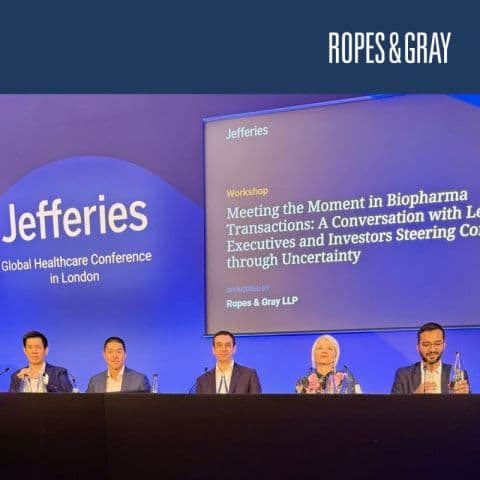
My biggest takeaway from Jefferies in London this year is simple:
The biotech industry is crowding into consensus plays at the exact moment the real returns will come from non-consensus science.
In conversation after conversation, the same themes kept appearing:
• Clinical stage over early science • Validated targets and modalities over new biology • Value in the pipeline over platform potential • Even historically early investors drifting later because LP pressure and fund-cycle timing are real
Here’s the structural mismatch:
The biology that will matter in 2030 and beyond has to be started now.
New modalities and mechanisms don’t mature on a one-year timeline. They require years of iteration, validation, and derisking. When the market inevitably swings back to reward innovation, the supply of true newcos will be thin. Scarcity always drives asymmetric outcomes.
We’ve seen this play out before.
After 2008, when much of the VC industry pulled back, a small set of often emerging firms leaned into innovation rather than away from it. They backed companies like Moderna, Juno, Agios, and Aragon, and those vintages went on to deliver the strongest returns in modern biotech history.
Those were not consensus trades. They were bold builds executed in a vacuum.
Jefferies this year felt like the start of a similar cycle.
Consensus deals will work. Metsera showed what’s possible when validated biology meets perfect execution and timing. I’ll always do the right consensus deals.
But the generational outcomes in the next cycle will come from the non-consensus builds that begin now.
That has always been Averin Capital’s center of gravity, and this week’s discussions only reinforced it.
Thanks to Ropes & Gray LLP and Rajarshi Banerjee for hosting the discussion and to Marianne D. De Backer, MSc, PhD, MBA, Akira Matsuno, and Christopher Church for a fantastic conversation.
#JefferiesHealthcare
36.0K views · 713 engagements
View on LinkedIn