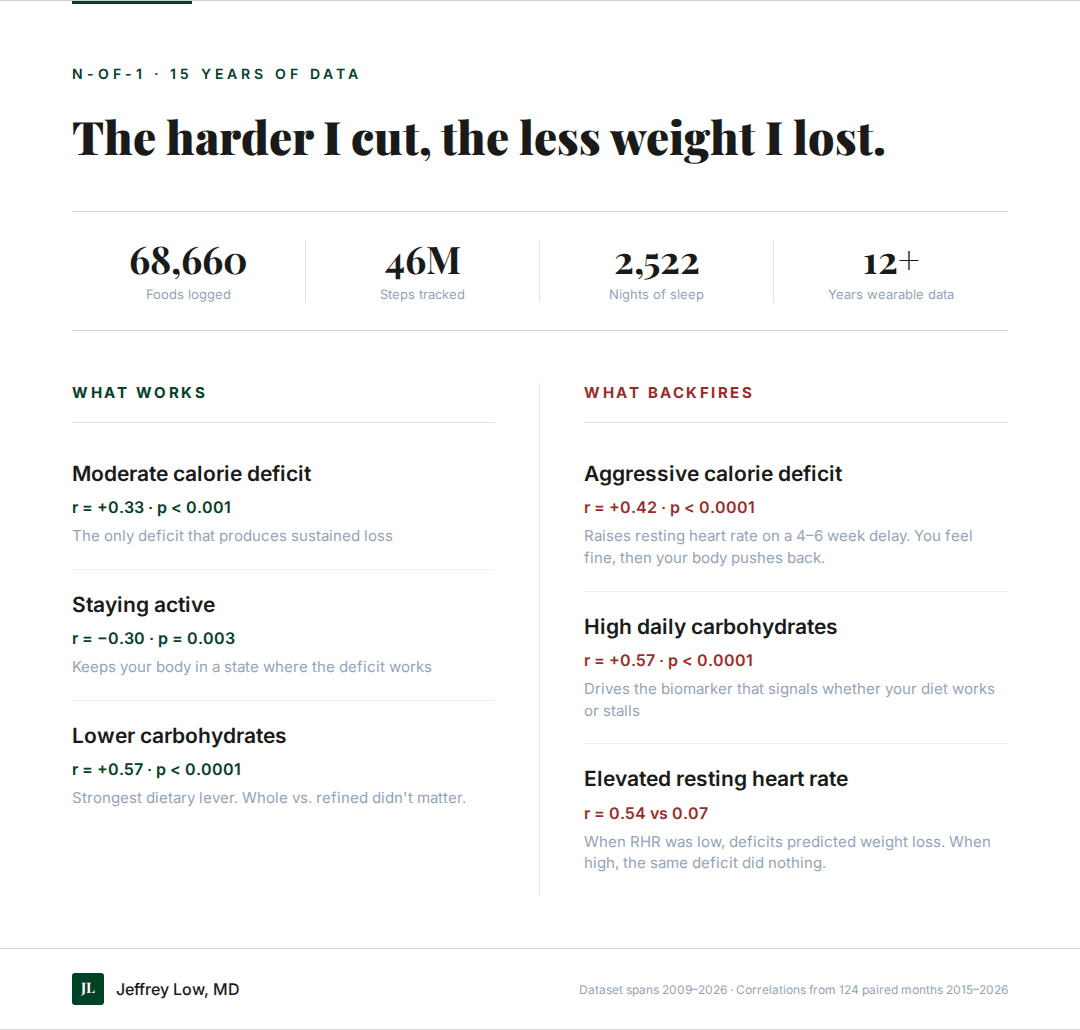
I logged 68,660 foods over 15 years. Here's what I found.
2,115 weigh-ins. 741 strength workouts. 46 million tracked steps. 2,522 nights of sleep. 12+ years of wearable data. 5 DEXA scans.
The months I actually lost fat were not the months I ate the least. They were the months I cut moderately and stayed active. That's it.
When I cut harder, it backfired. Aggressive deficits raised my resting heart rate on a 4-6 week delay (r = +0.42, p < 0.0001). And elevated RHR was the sign my body was fighting the deficit. In months when my RHR was low, calorie deficits predicted weight loss (r = 0.54, p = 0.0001). In months when it was high, the same deficit did nothing (r = 0.07, p = 0.64).
Hard dieting triggers the stress response that prevents hard dieting from working. The intervention disables itself.
The strongest dietary lever wasn't protein or fat or meal timing. It was total carbohydrates (r = +0.57, p < 0.0001). And whole grains performed identically to refined carbs. The source didn't matter. The dose did.
The harder I cut, the less weight I lost. Moderate deficit, lower carbs, stay active. That's what 15 years of data says works.
27.6K views · 245 engagements
View on LinkedIn