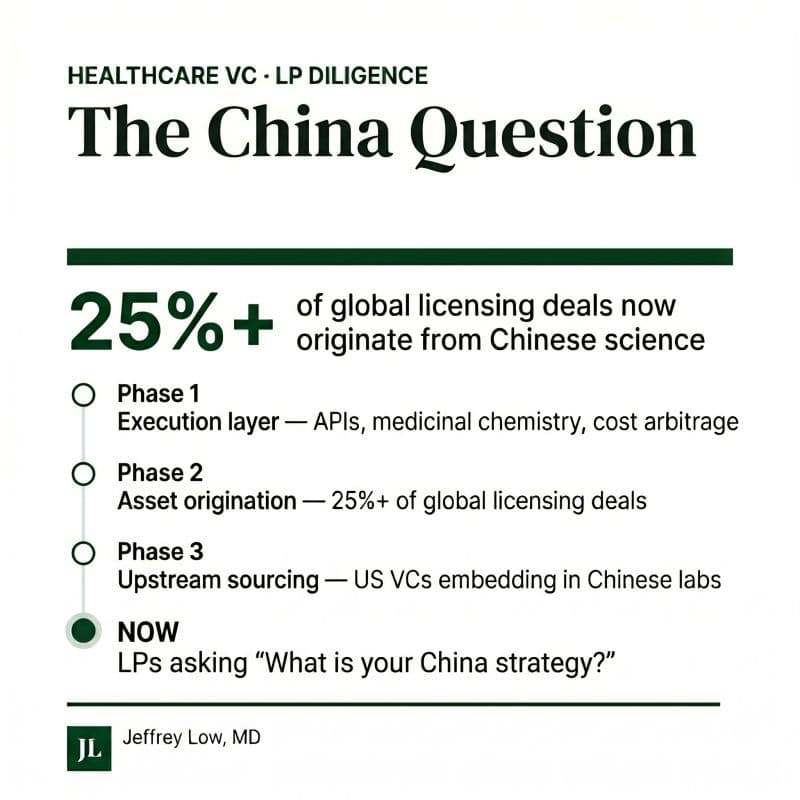
China-origin assets now account for more than 25% of global pharma licensing deals, and LPs are starting to ask every biotech venture fund what they plan to do about it.
A year ago, "China strategy" wasn't part of the conversation. Today it sits alongside portfolio construction, team pedigree, and co-investment rights. The speed of that shift tells you something about how seriously institutional capital is taking this.
The data is hard to argue with. Chinese scientists are running novel biology programs at lower cost and faster timelines. US venture firms are no longer waiting for conference presentations. They're embedding in Chinese labs, building relationships with PIs before first publication. The sourcing advantage is moving upstream, from licensing finished assets to co-developing programs from inception.
Washington is responding. The BIOSECURE Act reshaped CDMO relationships. There is growing bipartisan pressure to restrict Chinese-origin assets in federally funded drug programs. The policy environment is shifting as fast as the science.
But most funds don't have a real answer yet. They have a slide. They don't have a thesis.
At Averin, ours has been clear from day one: invest in platforms and infrastructure that compress timelines regardless of where the science originates. AI-native tools that work whether the biology starts in Boston or Shanghai. The geography of discovery is shifting. The infrastructure layer doesn't care about borders.
Every LP I've spoken to this quarter is testing for the same thing. Not whether you've thought about China, but whether your portfolio is built for a world where the best drugs increasingly starts there.
This is the question that will define the next fundraising cycle.
4.8K views · 103 engagements
View on LinkedIn