LinkedIn·
Takeda's Head of R&D Gave an AI Company a Molecule His Team Had Given Up On
Jeffrey Low, MDView on LinkedIn
Takeda's head of R&D gave an AI company a molecule his team had given up on.
Good binder, bad biophysics. Unstable, aggregated, impossible to make at scale. The company sent back 15 to 20 sequences. A handful worked. Andy Plump then asked his chemists whether traditional methods could have found those changes. They said no. Takeda is now rebuilding its research labs around in silico design.
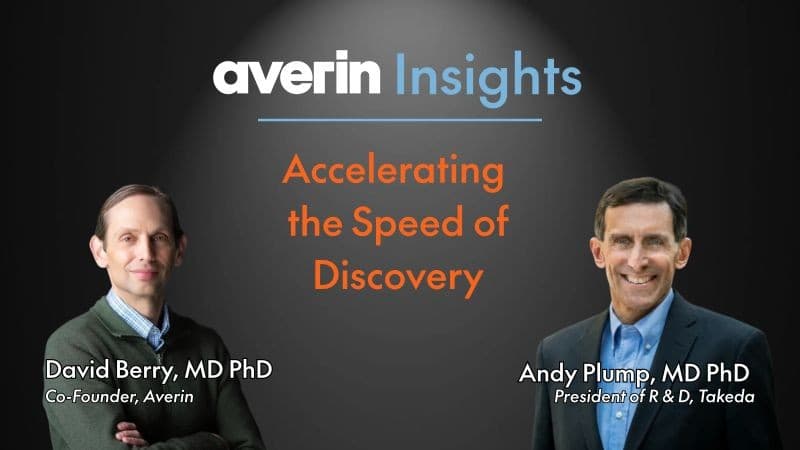
My partner David Berry interviewed Andy for the latest Averin Insights. Andy has run R&D at Takeda for 12 years, ran global research at Merck before that, and just took the first orexin agonist for narcolepsy through FDA approval, with two more launches behind it. He also admits mistakes on the record, which is rare at his level. Three of them:
1. Takeda chased every new modality. Microbiome, cell therapy, gene therapy. Building CMC strength across all of them cost too much, so the company cut back to a core set it could go deep on. Andy's view now: AI pays off inside a space you understand, not across everything.
2. He expected AI to transform development first. Research moved first instead, because research iterates in weeks and the risk stays small. Development runs at hundreds of outside sites under regulatory constraints, and a three year Phase 3 that works is hard to argue with. He still thinks a company that hasn't compressed its development cycle with AI in five years won't survive.
3. Mice don't get atherosclerosis. Andy built the ApoE knockout mouse in 1992, and the industry still runs toxicology in species that don't get our diseases. David's version: after Seres showed clinical cures in over 90% of patients with recurrent C. diff, investors asked whether it worked in the mouse model too.
He and David also compared notes on disappointing their mothers by leaving clinical medicine. Grandma, this one's for you.
987 views · 22 engagements
View on LinkedIn