LinkedIn·
Venture Capital's Favorite Origin Story Is the Whaling Ship. So Is Its Pay.
Jeffrey Low, MDView on LinkedIn
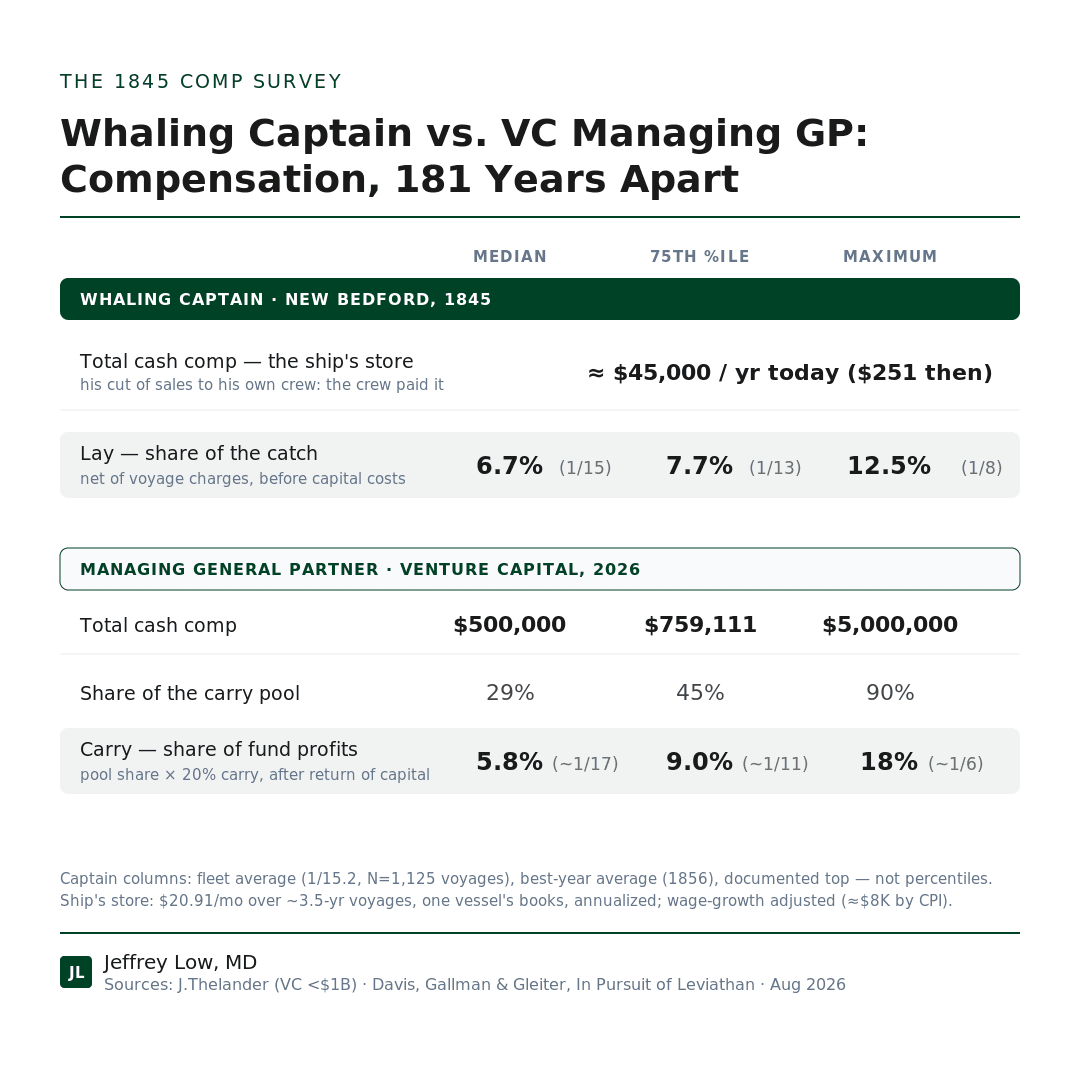
Venture capital's favorite origin story is the whaling ship. Two centuries later, the pay is remarkably similar.
The lineage is real. A New Bedford whaling agent pooled money from outside investors and spread it across captains he hired and voyages he never joined, and returns followed a power law, a few hauls paying for the rest. So I ran the numbers: the captain's pay package against this year's managing general partner survey.
The carry matches on paper. The captain's lay averaged a fifteenth of the net catch, 6.7%, across 1,125 logged voyages. A median managing GP at a fund under $1 billion holds 29% of the carry pool, which at 20% carry is 5.8% of fund profits. Two working partners, 180 years apart, land within a point of each other. Even the premium tier lines up: one in ten captains got above-standard terms from the agents who hired them, and 9% of venture firms today get above-standard carry from their LPs.
The base is where it gets interesting. The lay paid from the first barrel of proceeds; carry starts only after the fund returns its capital. Run a fund at 2x and the GP's cut of gross dollars comes to about 3%. The captain collected his full 6.7% even on voyages where the owners lost money.
The cash ran the other way. The captain's only cash was a cut of the ship's store, selling clothing to the crew at a markup: about $45,000 a year in today's terms, and his crew paid it. The median GP's total cash: $500,000, from the fund.
That is the 180-year trade: guaranteed cash for carry quality. VCs still make it. A partner at a multibillion-dollar fund plans on $650,000 to $800,000 in cash and about a tenth of the carry pool. Leave to raise a first fund under $100 million and the plan becomes $525,000 and more than half the pool. Then you write your own fund its first check: the GP commitment, one or two percent of the vehicle, from your own pocket. The spinout is choosing the captain's side of the table.
The deal itself is older than both. Silk Road caravan financiers under Islamic interest bans and Venetian merchants under Christian usury bans wrote the same contract: capital funds the venture, losses fall on capital, and the worker collects only from success.
The funds I have worked in, from a16z to Averin, run on the same contract. Twelve centuries in, both sides keep signing.
42.3K views · 186 engagements
View on LinkedIn